
Construction of the Anjou station
- Construction site summary
- Impact on customer trips
- Impact on local residents
- Learn more about the project
- Onglet 5
Construction site summary
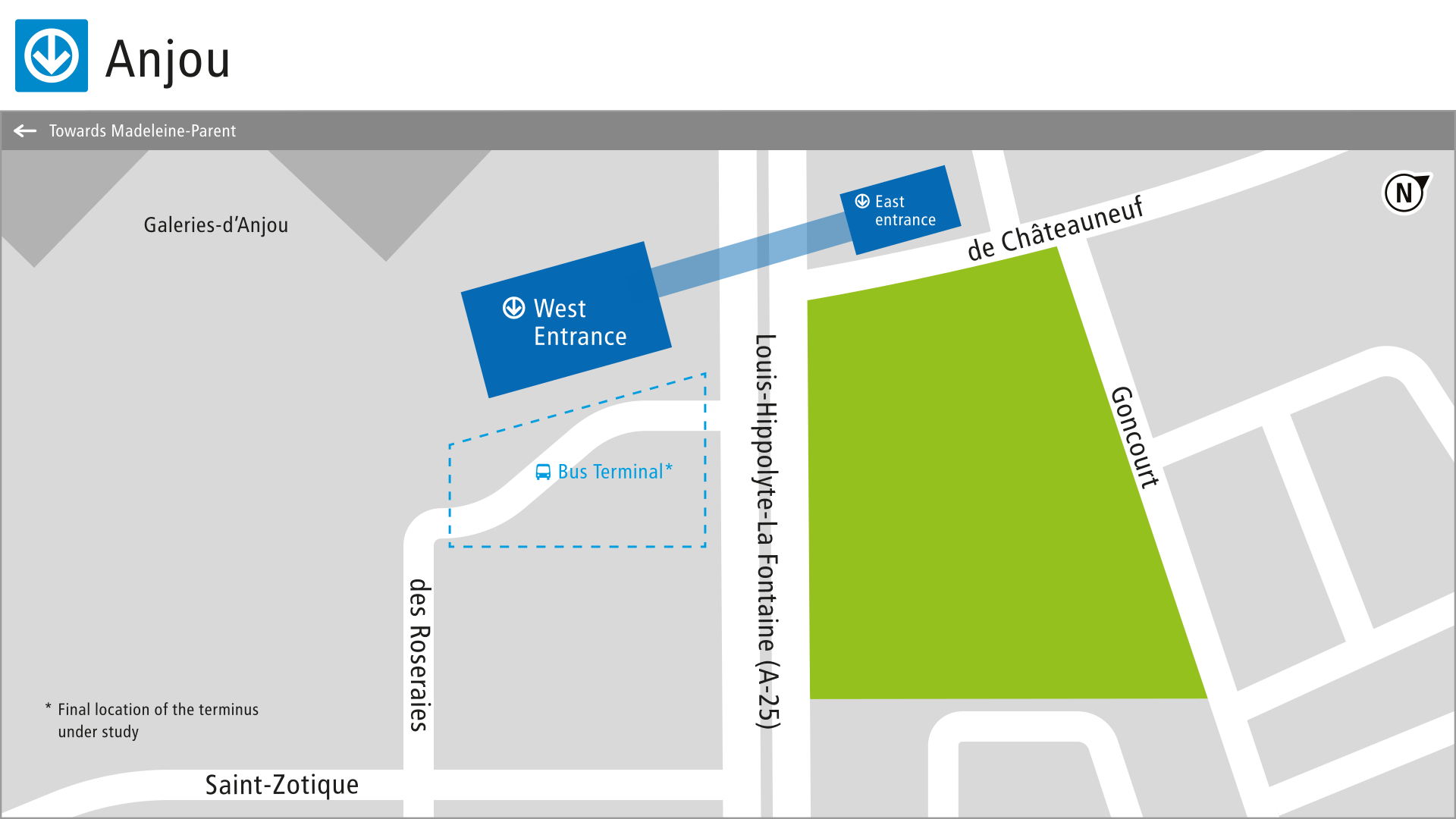
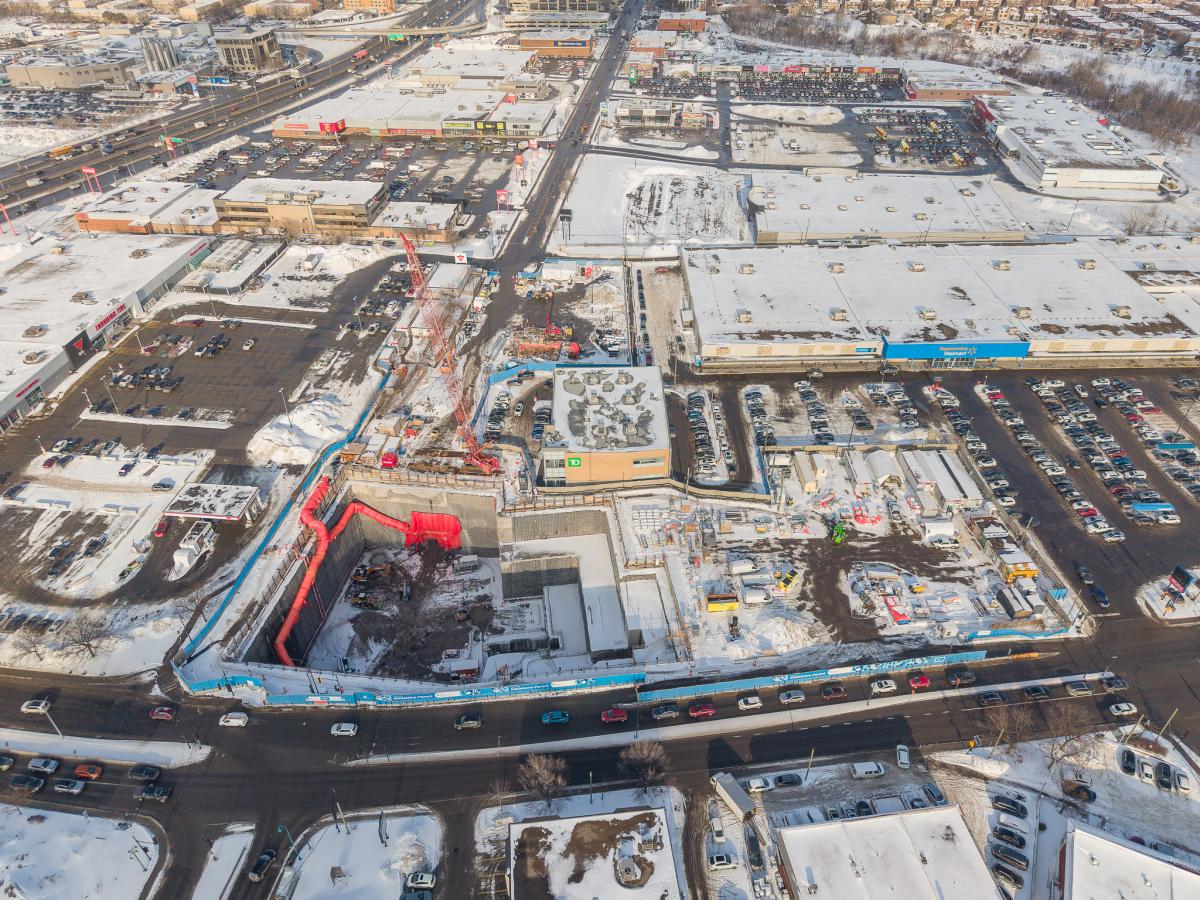
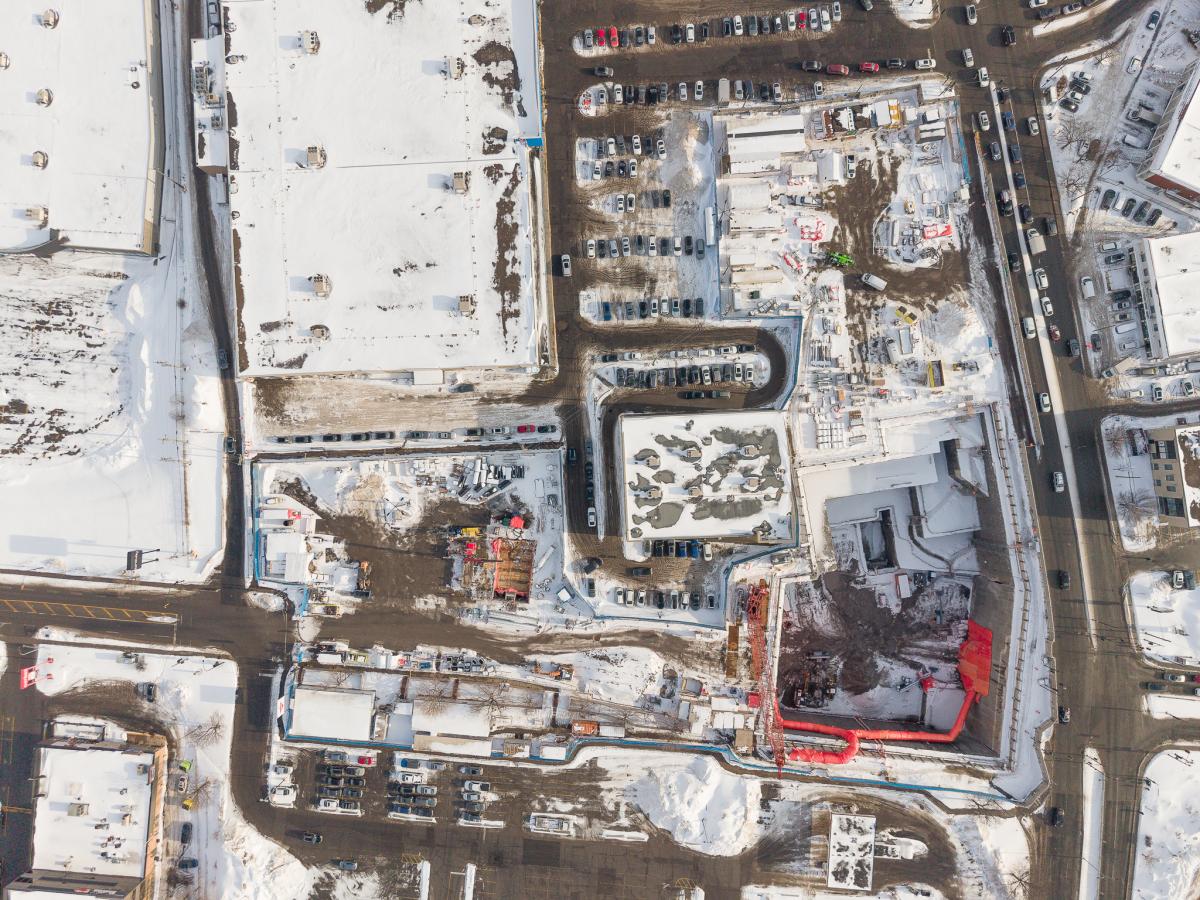
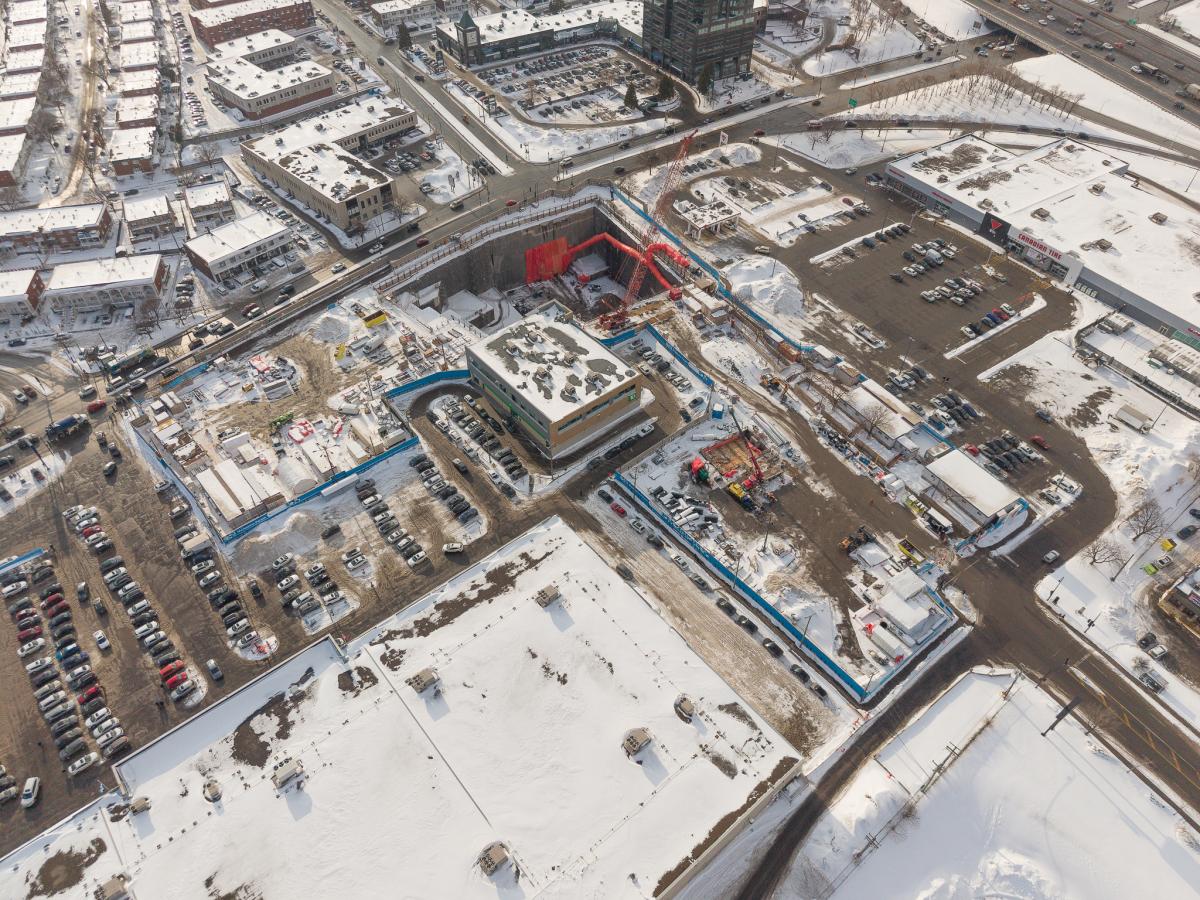
As part of the Blue line project, this worksite involves building a new accessible métro station with two entrance buildings on each side of Highway 25, and a bus terminal. The two entrance buildings will be connected by a pedestrian walkway under autoroute Louis-Hippolyte-La Fontaine (A-25). It will be open to the public and no fare will be needed to cross from one side to the other. The entire extension is expected to be commissioned in 2031
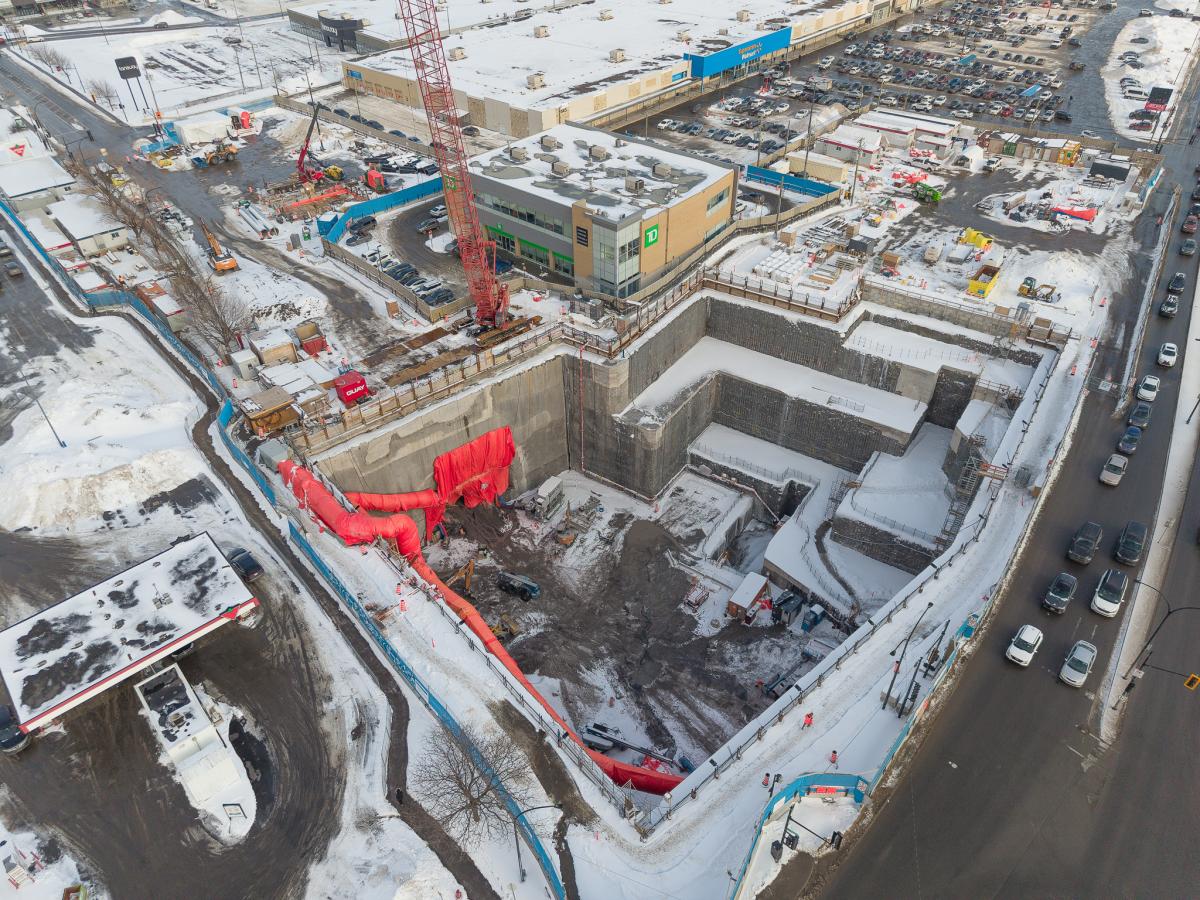
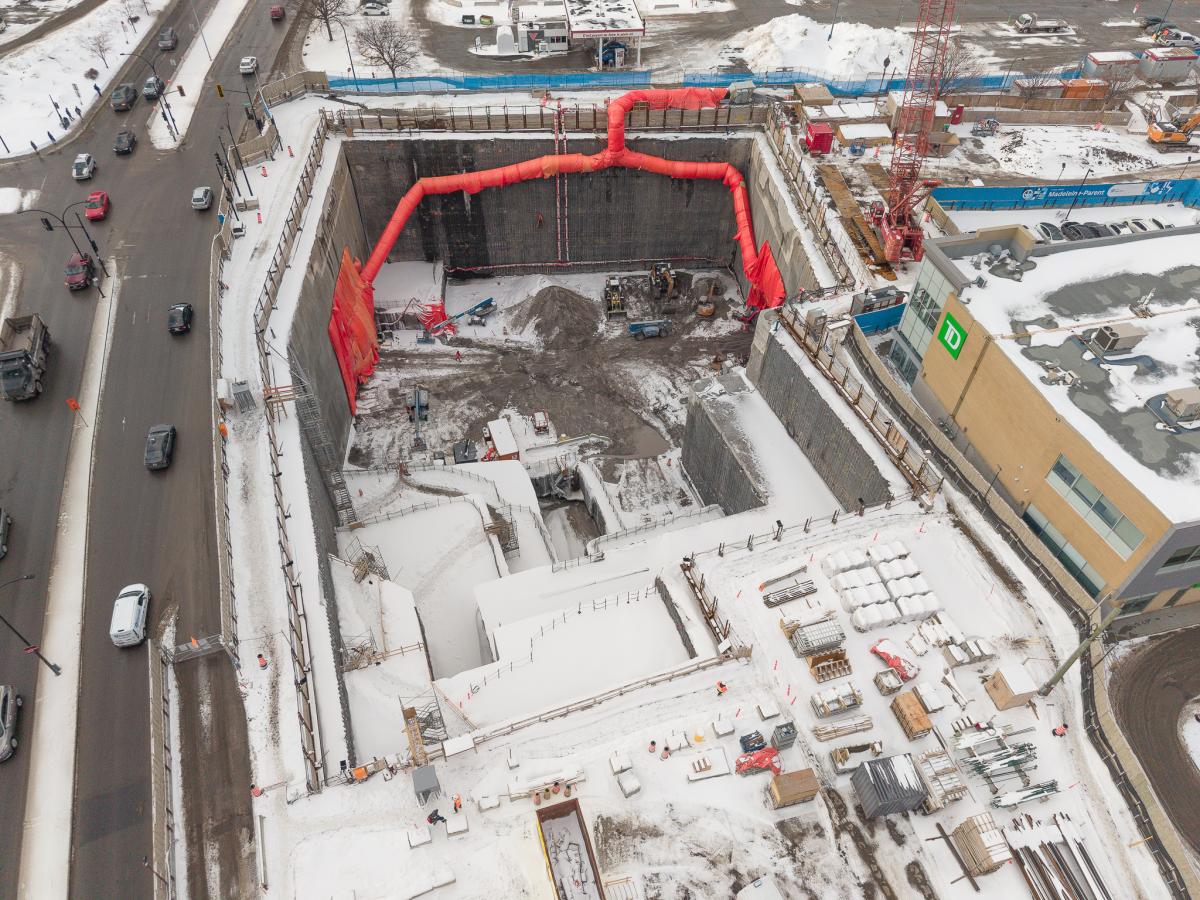
Current step: Vertical excavation of both sites of the station.
Building an underground infrastructure of this scale requires a tremendous amount of work. Here are the main steps required to build the future station:
Step | Status |
Preparatory work (relocation of underground water mains, sewers and cabling) | Completed |
Mobilization and site setup | Completed |
Vertical excavation of both sites of the station | In progress |
Horizontal excavation of the tunnel connecting the station's two entrances | In progress |
Shotcrete applied to the walls of the boarding platforms vault and the tunnel entrance | Upcoming step |
Tunnel boring machine work to excavate and line most of the tunnel | Upcoming step |
Concreting and construction of new infrastructures | Upcoming step |
Installation of finishing materials, linings and other architectural elements | Upcoming step |
Installation of mechanical and electrical equipment | Upcoming step |
Installation of track system and rails | Upcoming step |
Exterior design and landscaping | Upcoming step |
Testing and commissioning of equipment | Upcoming step |
Impact on customer trips
- The bus stop for route 141 - Jean-Talon, located on de Châteauneuf, has been relocated to the northeast corner of the intersection with avenue de Bourgneuf.
- The stop on boulevard L.-H.-Lafontaine along the construction site has been cancelled.

Impact on local residents
Work is taking place 24 hours a day, 7 days a week, at the west sector worksite, in accordance with the municipal regulations applicable to the Blue line project.
The work is currently underway on two sites, located on either side of Highway 25. Partial street closures are expected.
The rock excavation phase is currently underway in both the West and East sectors of the future Anjou station worksite.
Anjou West

- We have completely closed Place des Roseraies between Louis-H.-Lafontaine and Des Roseraies boulevards. This configuration will remain in place for several years.
Anjou East
Since May 2025:
- We have completed the final setup of the construction site. We have installed concrete barriers and noise barriers along de Bourgneuf Avenue and de Châteauneuf Boulevard to reduce noise and dust for nearby residents. This configuration will remain in place for several years.
- Sidewalks along the worksite are closed. Walkways have been set up to allow pedestrians to get around the site safely.
- On Châteauneuf Boulevard, one traffic lane will remain open in each direction for the duration of the work.
- Truck routes have been determined to limit traffic near pedestrian corridors. Service roads are primarily being used.
Cranes are in place in the West and East sectors.
- The crane is an electric model, which creates less noise than the diesel-powered mobile cranes and produces no exhaust gas.
- The crane will not be used when weather conditions are unfavourable.
- When not in use, the crane will be left in “weathervane mode,” allowing it to pivot freely on its axis in strong winds. If you see the crane turning while the worksite is closed, this is normal!
- The crane is equipped with a “zoning system.” This electronic system allows the crane to be programmed with boundaries that stop it from lifting or moving a load into preset zones. The boundaries is applied to the entire perimeter of the worksite to ensure that no lifting takes place over nearby residences or public areas. If lifting in a public area is necessary, a safety perimeter will be set up with a flagger present to redirect the flow of pedestrians and vehicles.
Join your local good neighbour committee!
Do you live near the future Anjou station and want to have your say in how the Blue line project worksite will fit into your neighbourhood?
A good neighbor committee has been set up as a space for dialogue between the Blue line extension project team and the local community. We’re currently looking for people who live in the area to complete the committee and represent local residents at a few meetings per year.
Write to us to apply or to find out more.
Learn more about the project
parlons·en
Public information session - Anjou sector
On March 24 and 25, 2025, information sessions were held to inform residents about the métro infrastructures being built in this area, how the worksite will be set up, and what happens next.
Another meeting was held in June to present the upcoming work in the Talcy Park area for the construction of Anjou workshop and underground garage.
Consult the presentation (in French only)

In the fall of 2024 and 2025, urban forestry work will take place around the Blue line project worksites. Trees that interfere with the construction sites will be protected, replanted, or cut down. Our team of forest engineers, landscape architects, urban planners, and sustainable development experts has carefully planned these interventions to preserve as many trees as possible.
The goal is to replant the trees wherever possible. Soverdi, the not-for-profit organization overseeing the replanting process, will monitor and care for the trees after they are transplanted to ensure their survival. Trees that can’t be replanted due to their size or condition will be recycled into wood chips, firewood or compost depending on the quality of the wood. The health and species of the trees will also help determine which ones need to be cut down, based on whether they are diseased, subject to borer infestations, or invasive, among other factors.
Ultimately, Blue line project sites will be revegetated and several hundred new trees planted, for a stronger, healthier canopy. For every tree replanted or cut down, we will plant more than two in their place.
let's chat
Public participation
Information sessions, talks, activities, good neighbour committees: our team wants to meet you!
Information booth
at Le Boulevard Shopping Centre
More about the Blue line project
The project in images
Discover recent photos of the project, including views of the future station and the location of its East and West entrances.
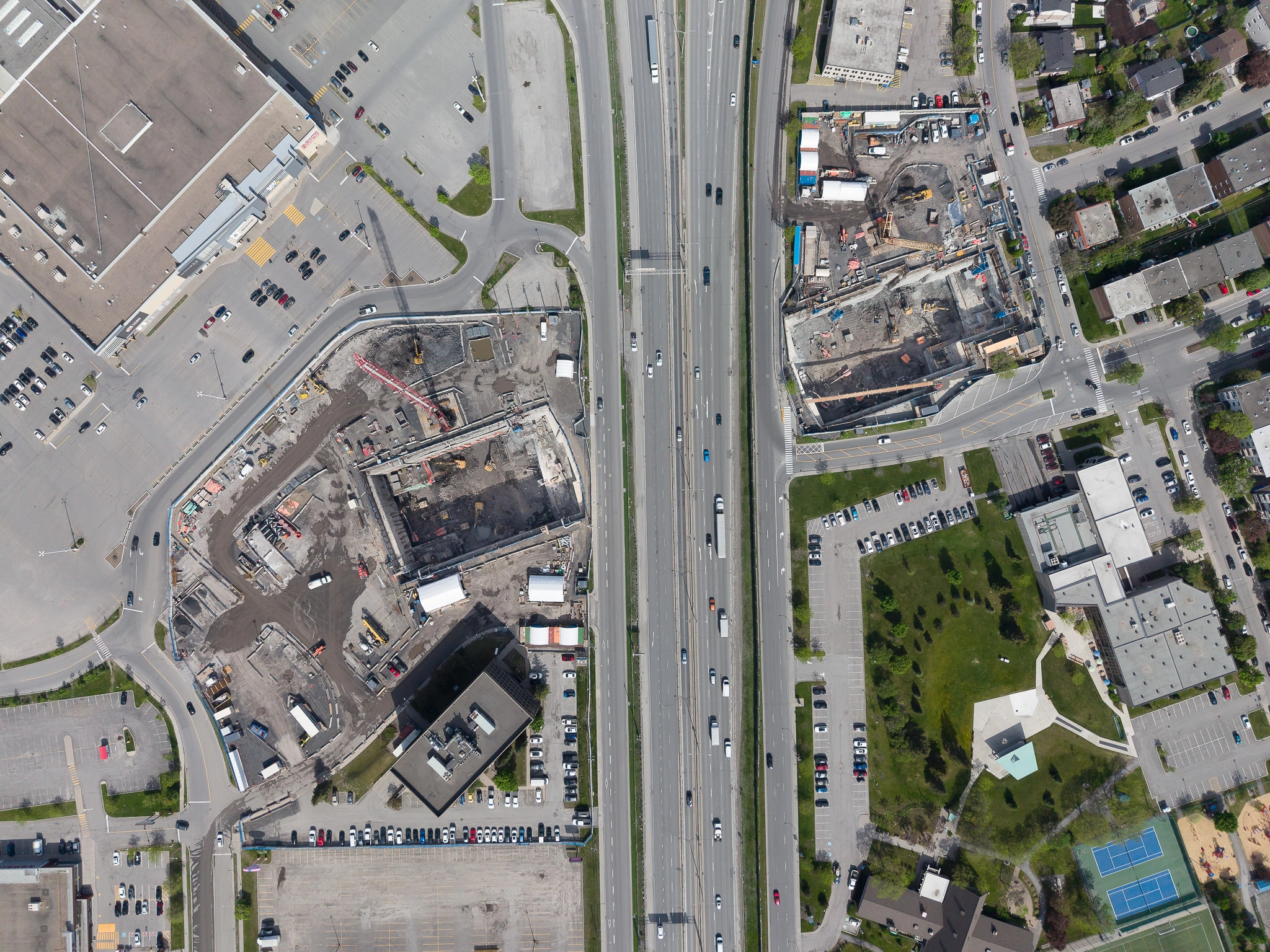
The construction sites in May 2026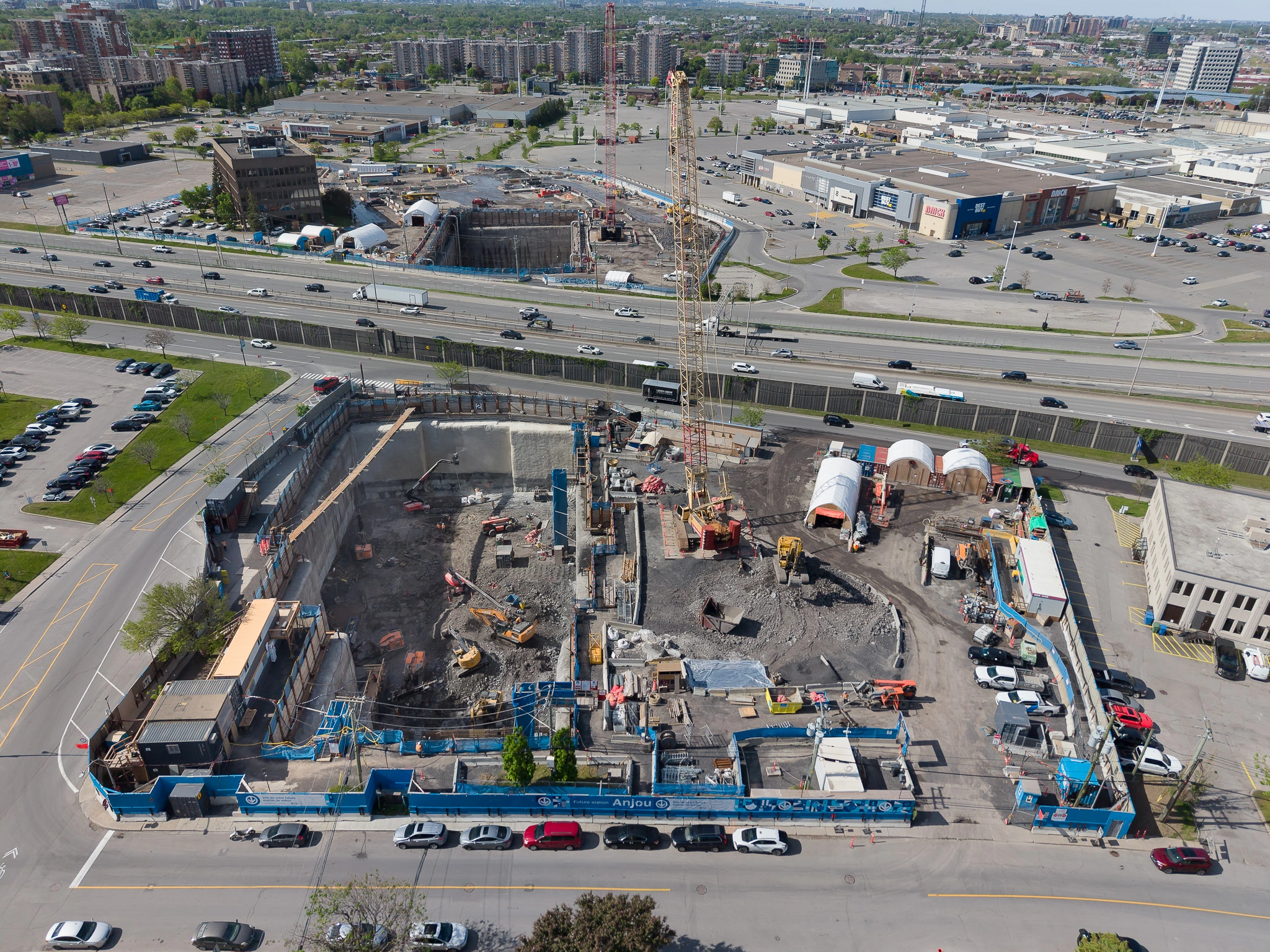
The construction site in May 2026 - East sector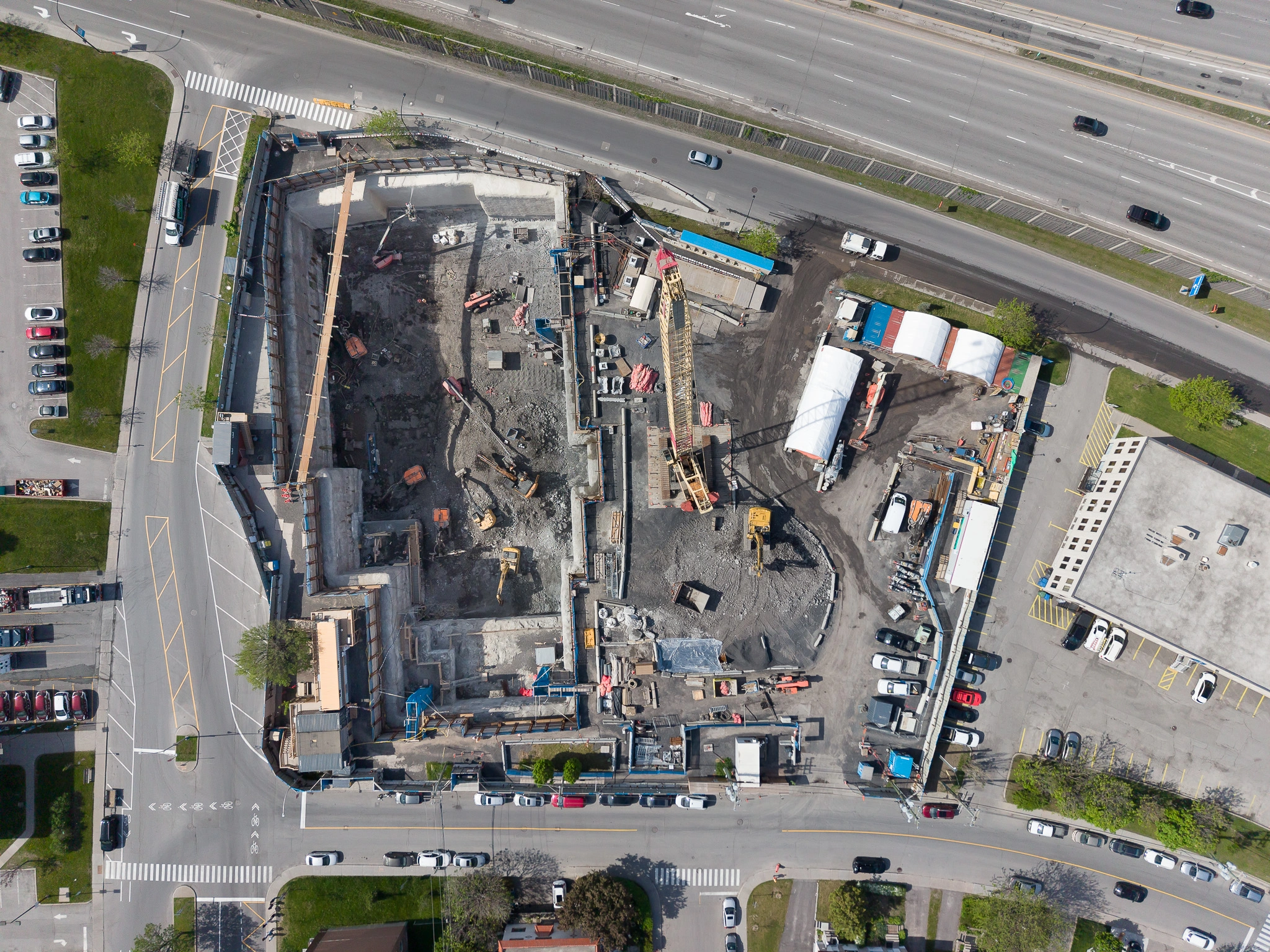
The construction site in May 2026 - East sector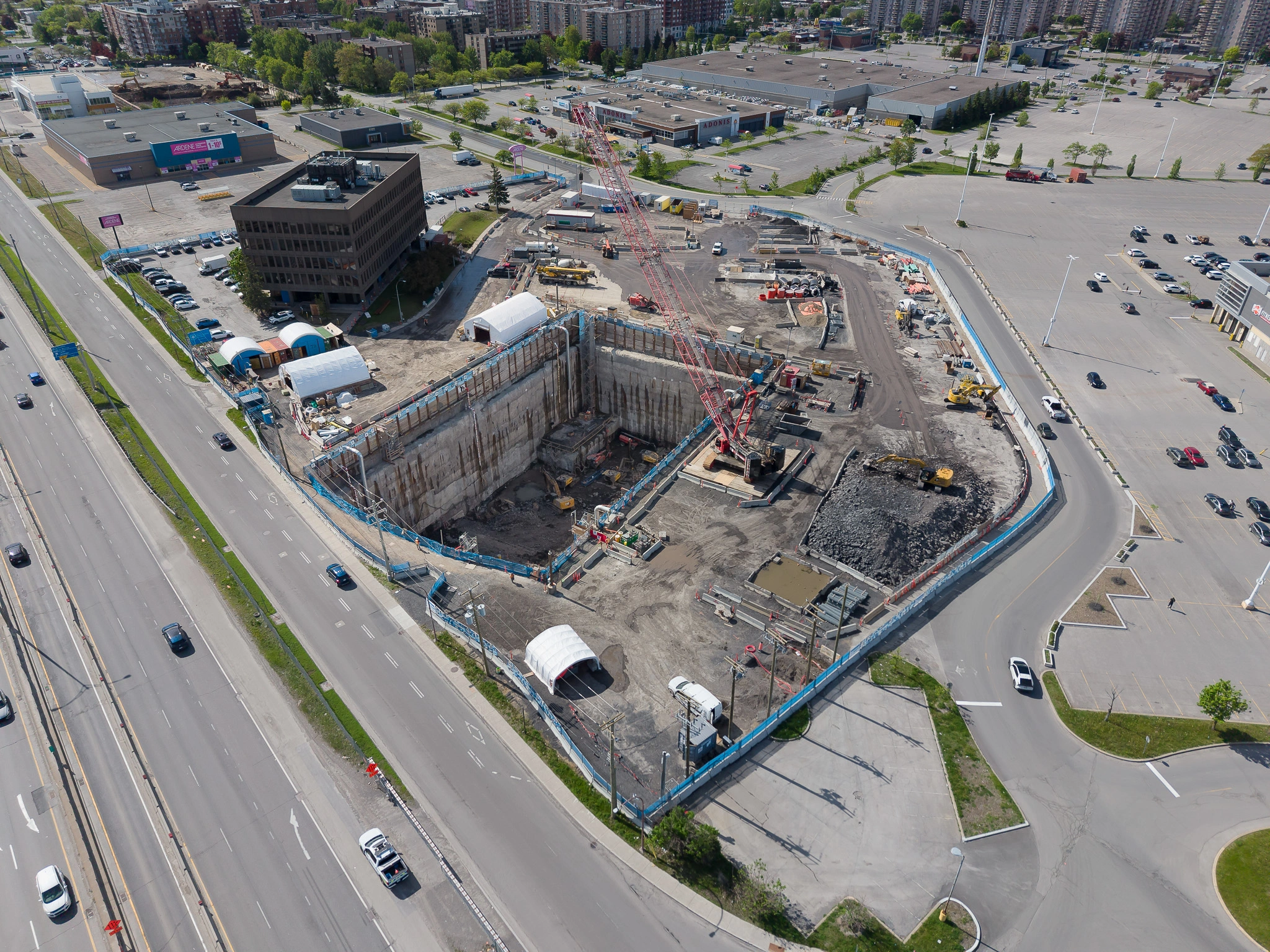
The construction site in May 2026 - West sector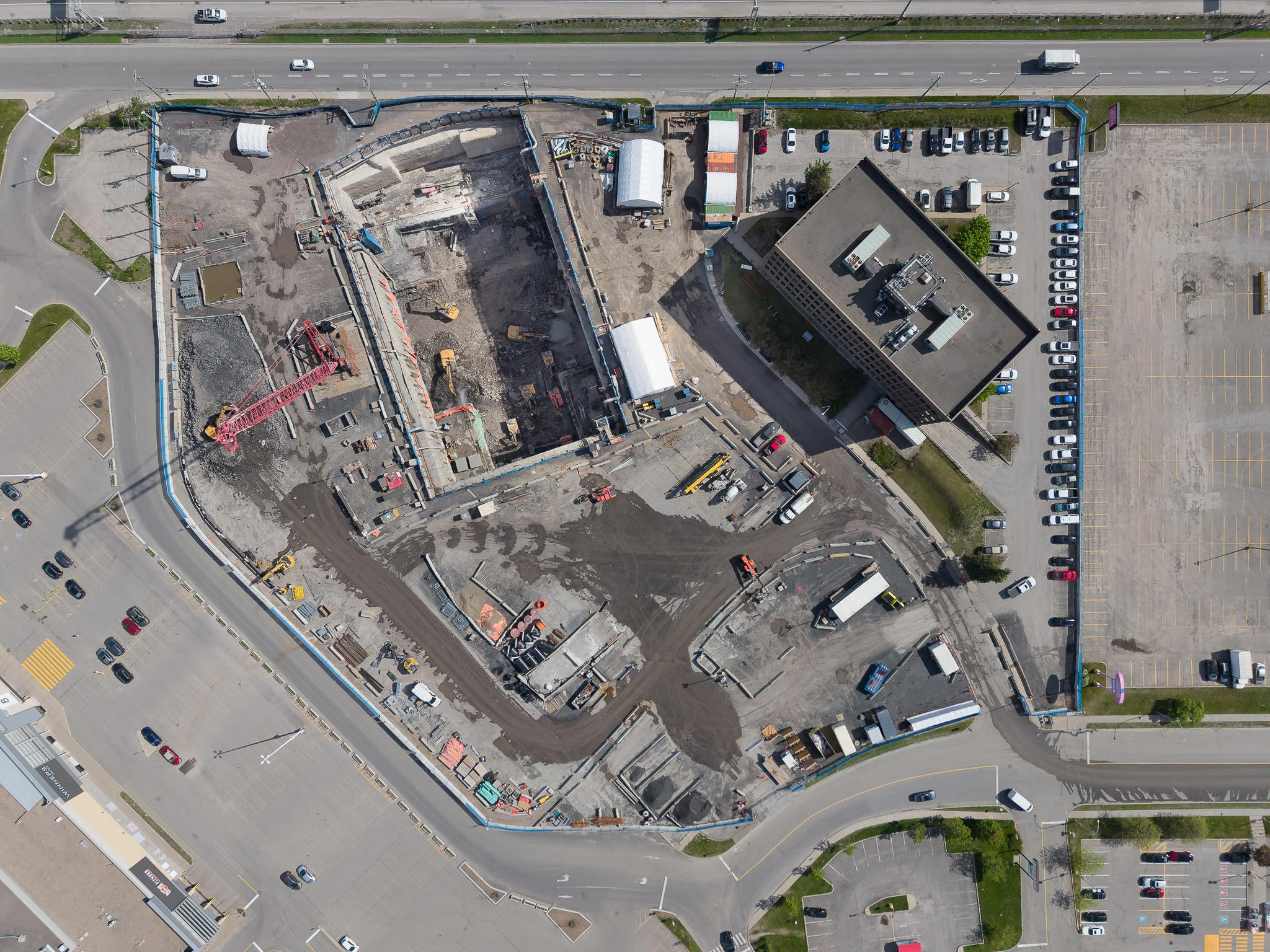
The construction site in May 2026 - West sector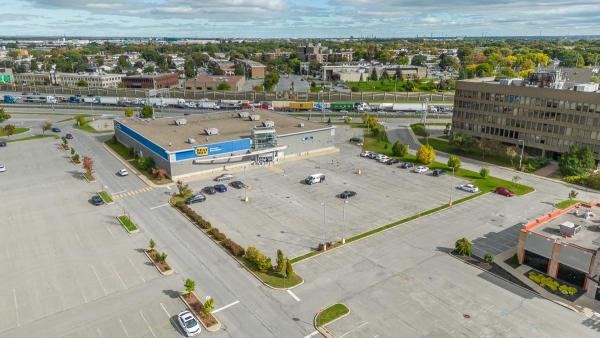
The main entrance building will be built on the west side of autoroute Louis-Hippolyte-La Fontaine (A-25)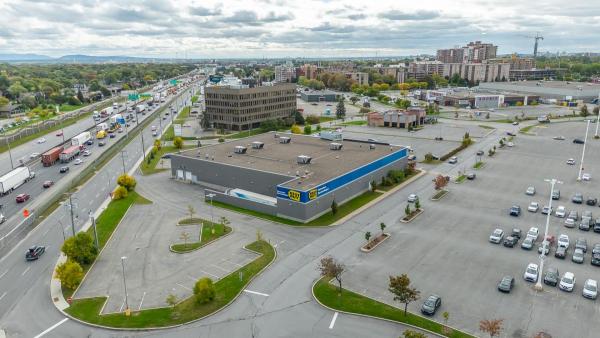

Site of the second entrance building east of autoroute Louis-Hippolyte-La Fontaine (A-25) - Future Anjou station (working name)
The Blue line project follows in the wake of the Déclaration du gouvernement du Québec et de la Ville de Montréal to revitalize Montréal East. Many projects are underway to give a new impetus to this sector. Increased mobility, economic development, and improved living environments are at the heart of this ambitious project. For more information, see Québec.ca/RevitalisationEstMontreal (in French only).