STM

Art in the métro

Even before the beginning of its construction in the early 60s, Montréal’s métro was promised to have a style of its own: Every station was to be conceived by a distinct architect. Instead of travelling on a system where all stations are alike – which is the case for most metros in the world – Montrealers would commute in a system where every station is unique and decorated with artworks. In fact, initiators of the project, leaded by mayor Jean Drapeau, insisted that art be integrated to stations. Thenceforth, the population of Montréal came into contact with an aspect of our culture that was until then only seen in museums.


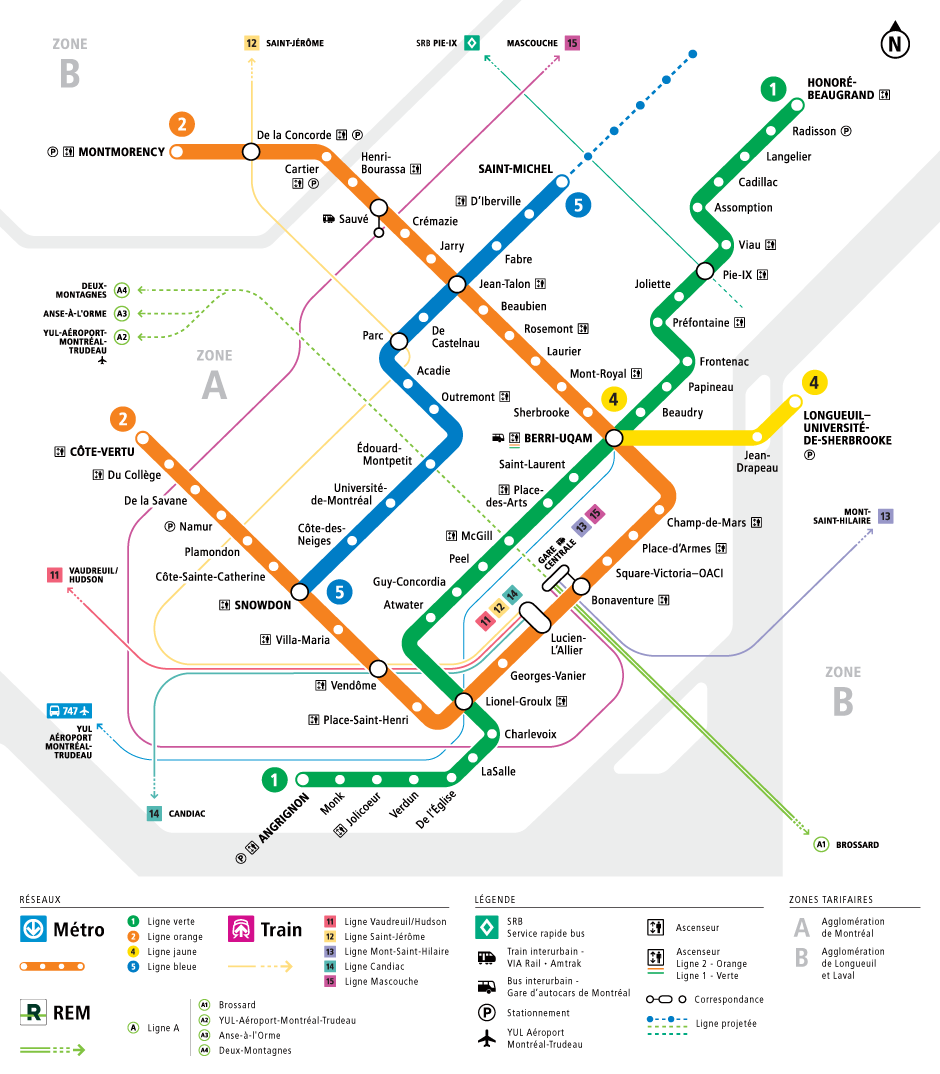
Artworks are not found in all 26 stations of the 1966 original system. By then, financing of art usually relied on the generosity of companies or organizations. Besides, artworks where not automatically included in stations’ plans, but integrated afterwards. The métro’s first artwork was inaugurated in 1967 – more than a year after the opening of the métro. It was Frederic Back’s painted glass mural at Place-des-Arts and was donated by Steinberg’s, the former food store chain. Other donators of that period, were: Gouvernment of Québec (Champ-de-Mars), the Société Saint-Jean-Baptiste (Sherbrooke), Caisses populaires Desjardins (Crémazie and Berri-UQAM), the Société des Artisans (Papineau) and the Macdonald Tobacco Co. (McGill).

Cercles de Jean-Paul Mousseau à la station Peel
Peel Station
Circles by Jean-Paul Mousseau
Photo credit : Ville de Montréal.

Gestion de documents et archives

The painter and caricaturist Robert LaPalme acted as art director for the integration of art in the métro. He showed a clear preference for representational works that would recall Montréal’s history. Themes chosen to be exploited in some stations had been included in a list. Among them: A mural recalling the produce growers and the feed and vegetable markets of Montreal at Saint-Laurent station; the passage from the French to the English regimes at Jarry; Kings that ruled over Canada at Rosemont; The arrival of les Filles du Roi at Jean-Talon; the creative and eccentric elements of the city at Beaudry. These are all projects that were never realised due to lack of funding. On the other hand, artist Marcelle Ferron held on to her idea and succeeded to impose an abstract stained-glass work for Champ-de-Mars station – certainly one of the network’s most spectacular work.

During the construction of extensions, in the 70s and the 80s, architects were asked to take care of the integration of artworks into the architecture of stations from the time of their conception. While a few architects chose to realise the artwork themselves, most others asked to artists with whom they’ve cooperated during construction time. By giving this responsibility to architects, the goal was to integrate art at its best into architecture and thus, allowing it to have all the place it deserved. In addition, obligation to respect a theme or to create a representational work were conditions of the past; freedom of expression was the new rule. In some cases, the artwork even became functional. For instance, Jean-Noël Poliquin’s stainless steel tubular elements at Fabre station just not only have a decorative purpose, for they also serve as hand rails and they support the station’s benches.

Entourage Art Nouveau d'Hector Guimard à la station Square-Victoria
Square-Victoria Station
Art Nouveau métro entrance by Hector Guimard
Photo credit : Quartier international de Montréal

Through the architecture of its stations and its artworks, the Montréal métro is an important witness of the different eras – from the 60s to the 80s – that saw it arise. Our métro is also one of the world’s largest underground art museums. This page offers you a virtual visit of artworks that can be found in 50 stations on the network. Click on the icons on your left to obtain enlargements of artworks.